

Extraction isn’t the hard part, definitions are
The hardest financial question often starts after you’ve found the numbers.
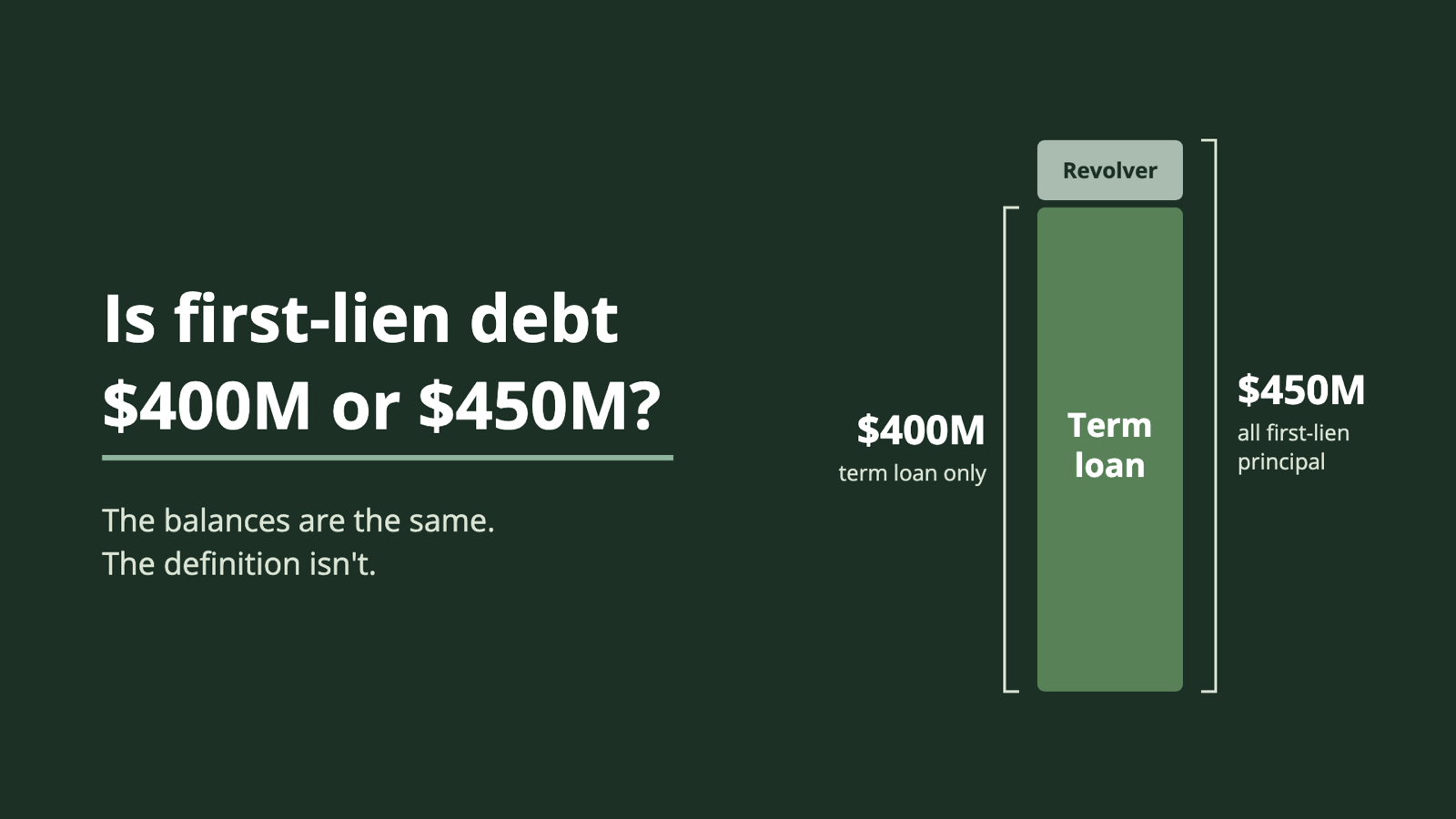
Consider a borrower with a $400 million first-lien term loan and a $50 million drawn revolver, also secured by a first-priority lien.
Ask for the outstanding first-lien principal and the answer could be $450 million.
But ask for the term-loan balance excluding the revolver, as a particular portfolio-reporting template might, and the answer is $400 million.
Same borrower. Same documents. Same accurately extracted balances. Different questions.
This is a simple illustration, but it captures a pattern I’ve noticed in financial reporting discussions with investment teams:
Finding the number often isn’t where the work ends. It’s where the discussion begins.
In my last article, I argued that a number can be sourced and still be wrong for the task. Here is the deeper challenge: how does an investment firm make sure every analyst and AI workflow applies the same intended definition?
The call after extraction
We spend a lot of time measuring whether AI can pull the right figures out of PDFs and spreadsheets. That’s important work, and messy documents still make it difficult.
But imagine perfect extraction for a moment.
The system finds every amount, date, footnote and table cell. It still needs to know what qualifies as the metric the investment team asked for.
- Cash: does it mean all cash reported on the balance sheet, or the restricted subset permitted to be netted under a credit agreement?
- Debt: does it mean the accounting carrying amount, potentially net of unamortized financing costs, or gross principal outstanding?
- LTM EBITDA: is the task to sum reported quarters, or to calculate an agreement-defined figure that permits specific pro forma adjustments?
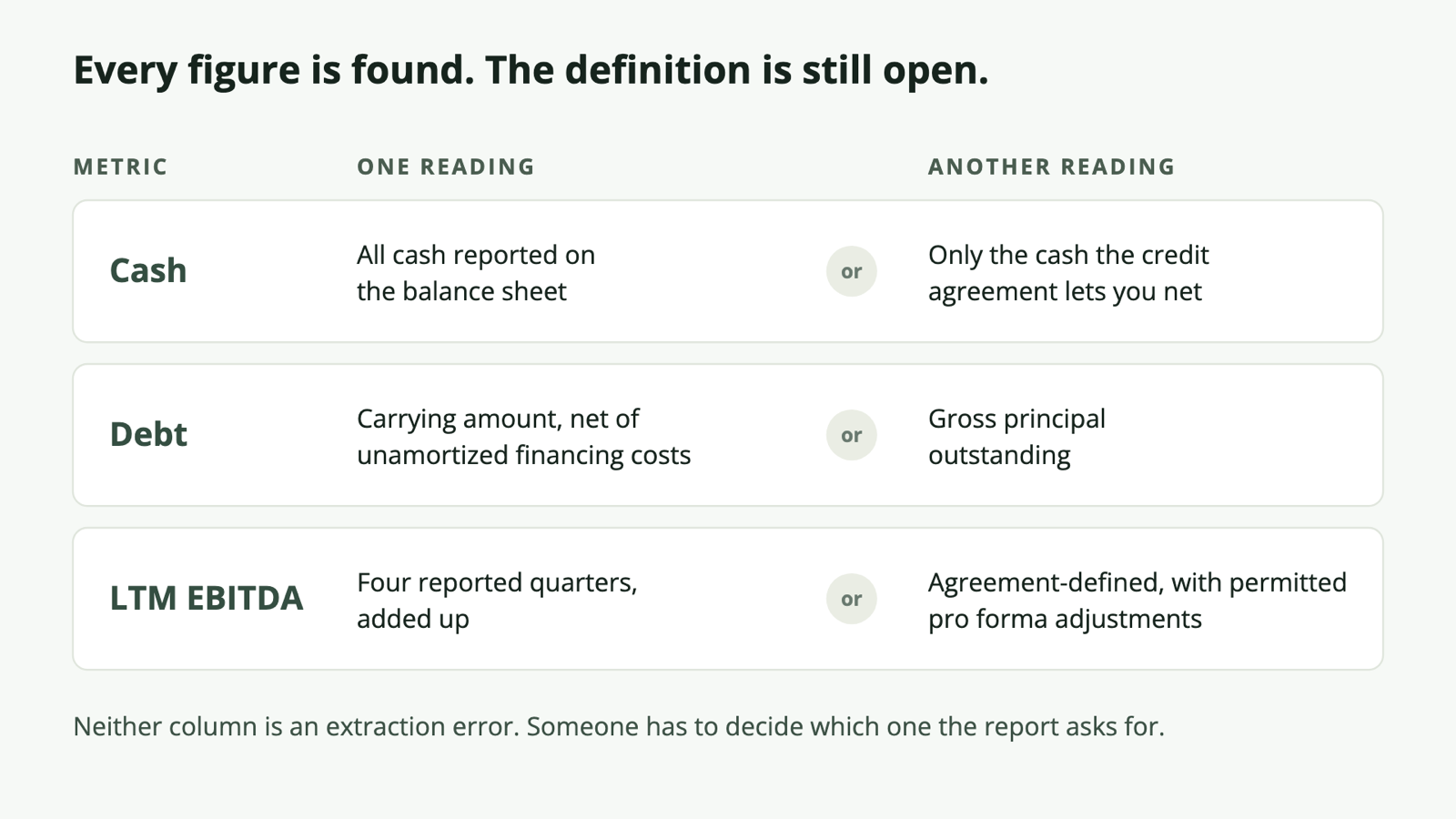
These aren’t extraction errors. They’re what I’ve started calling definition calls: moments when the source figures are available, but someone must establish which figures and rules satisfy the firm’s actual reporting requirement.
Sometimes the governing agreement answers that question. Sometimes the reporting template does. Sometimes the documents are ambiguous and a person must resolve the issue.
A model selecting an interpretation is not the same as a firm approving that interpretation.
When a correct answer doesn’t survive the next analyst
Return to the borrower with the $400 million term loan and the $50 million revolver.
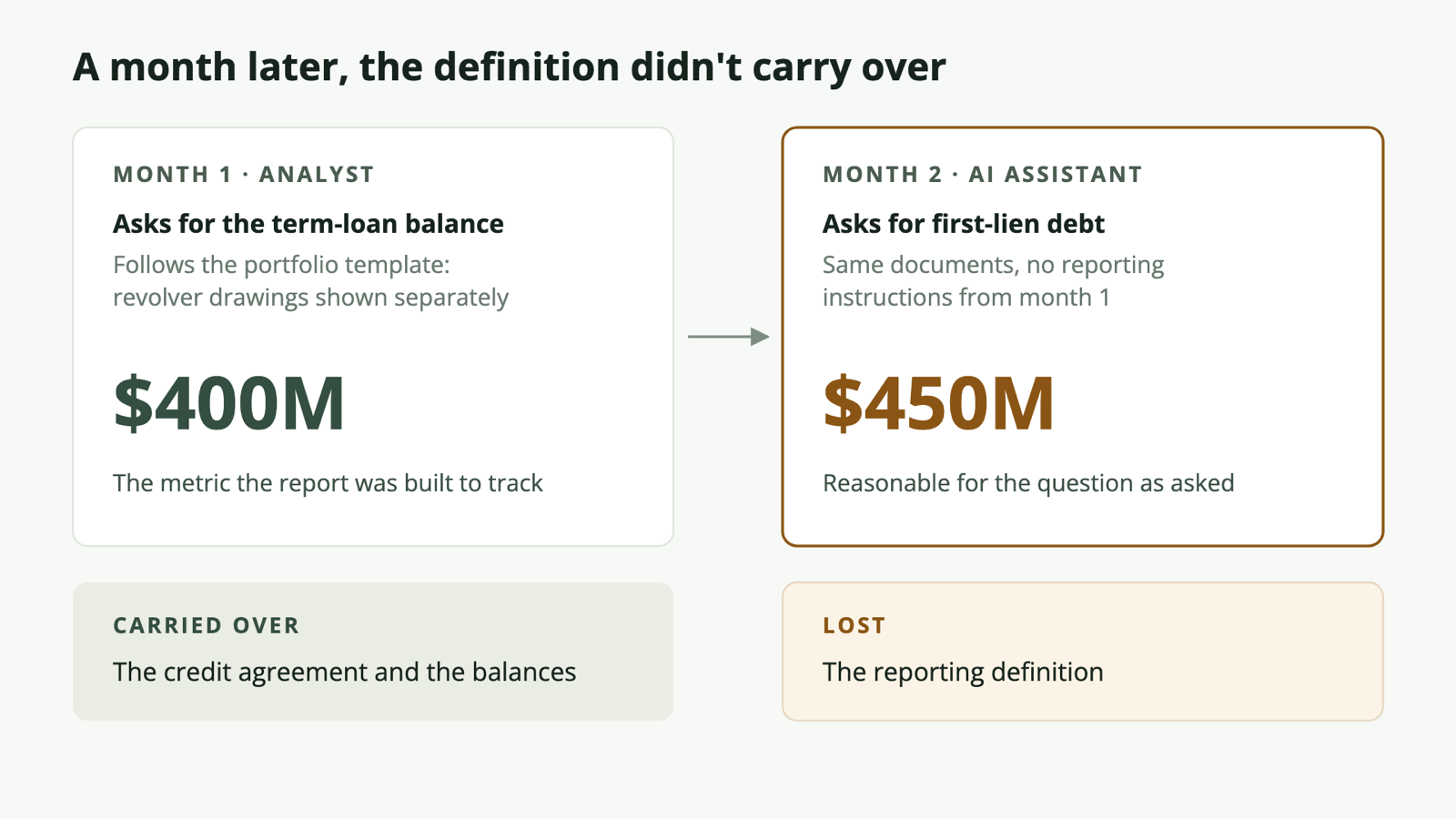
An analyst preparing a portfolio report knows the relevant template calls for the term-loan balance with revolver drawings shown separately. They report $400 million.
A colleague prepares another report a month later. They ask an AI assistant for first-lien debt. Without the first analyst’s reporting instructions, the assistant includes both first-lien facilities and returns $450 million.
The second answer can be reasonable for the question as phrased. It’s just inconsistent with the metric the first report was built to track.
The credit agreement has not changed. The balances haven’t changed. What failed to carry over was the reporting definition.
And this becomes a much larger issue when AI makes it easy for every analyst to create an internal workflow. One team builds an underwriting assistant. Another builds a quarterly-monitoring agent. A third builds an investment-committee memo generator.
Each can look impressive on its own. Yet if they independently decide what “debt,” “cash” or “EBITDA” means, the firm risks scaling inconsistency alongside productivity.
Today, many definition calls are stored informally: in spreadsheets, reporting templates, emails, and the knowledge of the analyst who has covered the company longest.
An AI system might interpret one of these conventions correctly in a single session. That is not the same as making it available to the next analyst, the next workflow, or the next quarter.
A model can learn a definition in a conversation. An institution needs that definition to survive the conversation.
The infrastructure for shared meaning
This is why I think an ontology will become an essential part of financial AI infrastructure.
The word sounds technical. The idea is practical: a shared, explicit vocabulary for what the firm means by its financial terms, and how those meanings change with the borrower, credit agreement, reporting purpose and period.
It isn’t a single global formula for EBITDA. It is a way to distinguish reported EBITDA from management-adjusted EBITDA and agreement-defined covenant EBITDA, and to make clear which one a particular task requires.
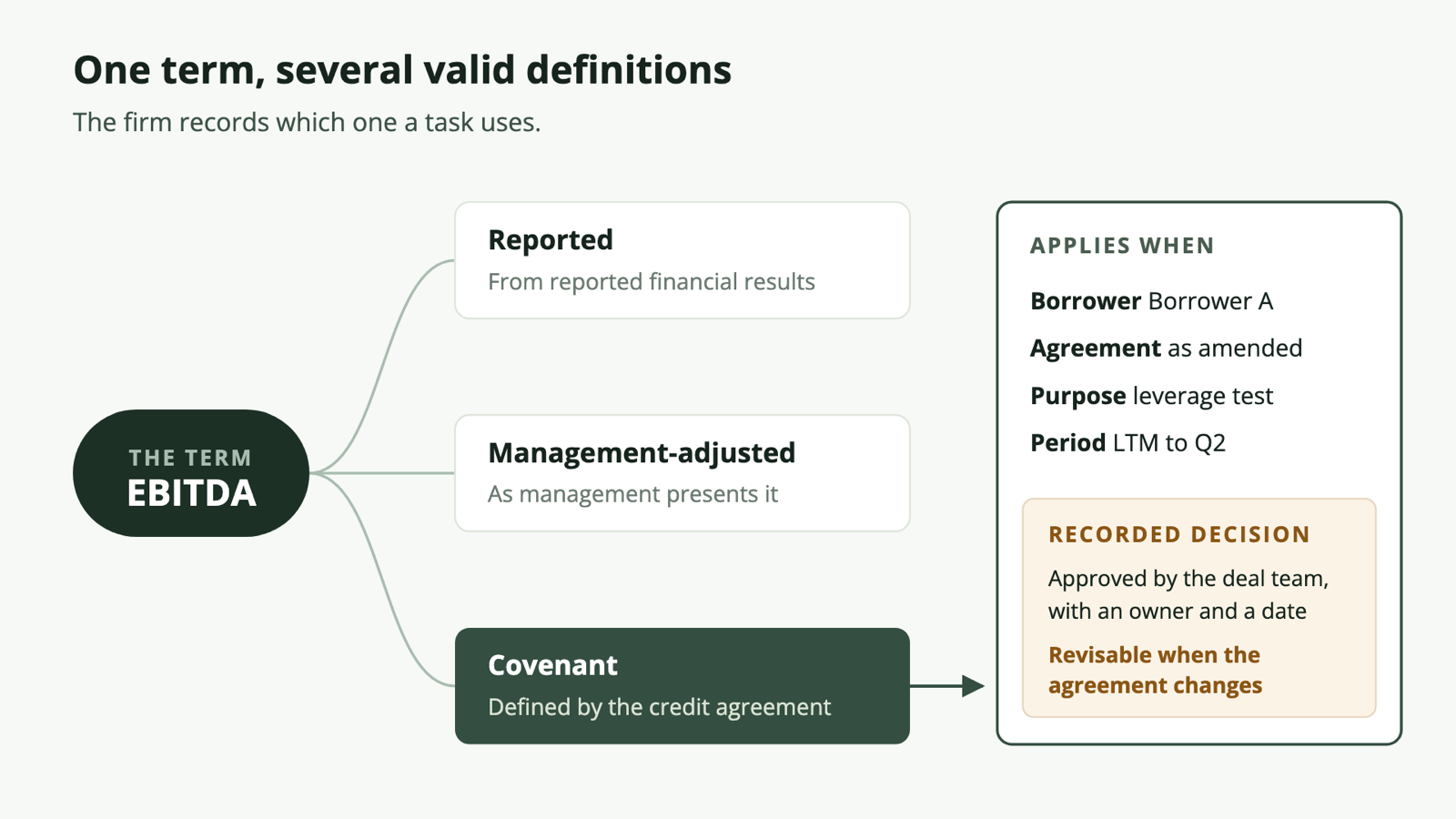
It isn’t an automatic judge of which interpretation is right. Human decisions still need ownership. Agreements can change. Exceptions need to be reviewed, and an approved definition must be revisable rather than silently applied forever.
But the ambition is simple: once the firm has settled a definition call, that decision should not disappear when someone closes a chat window.
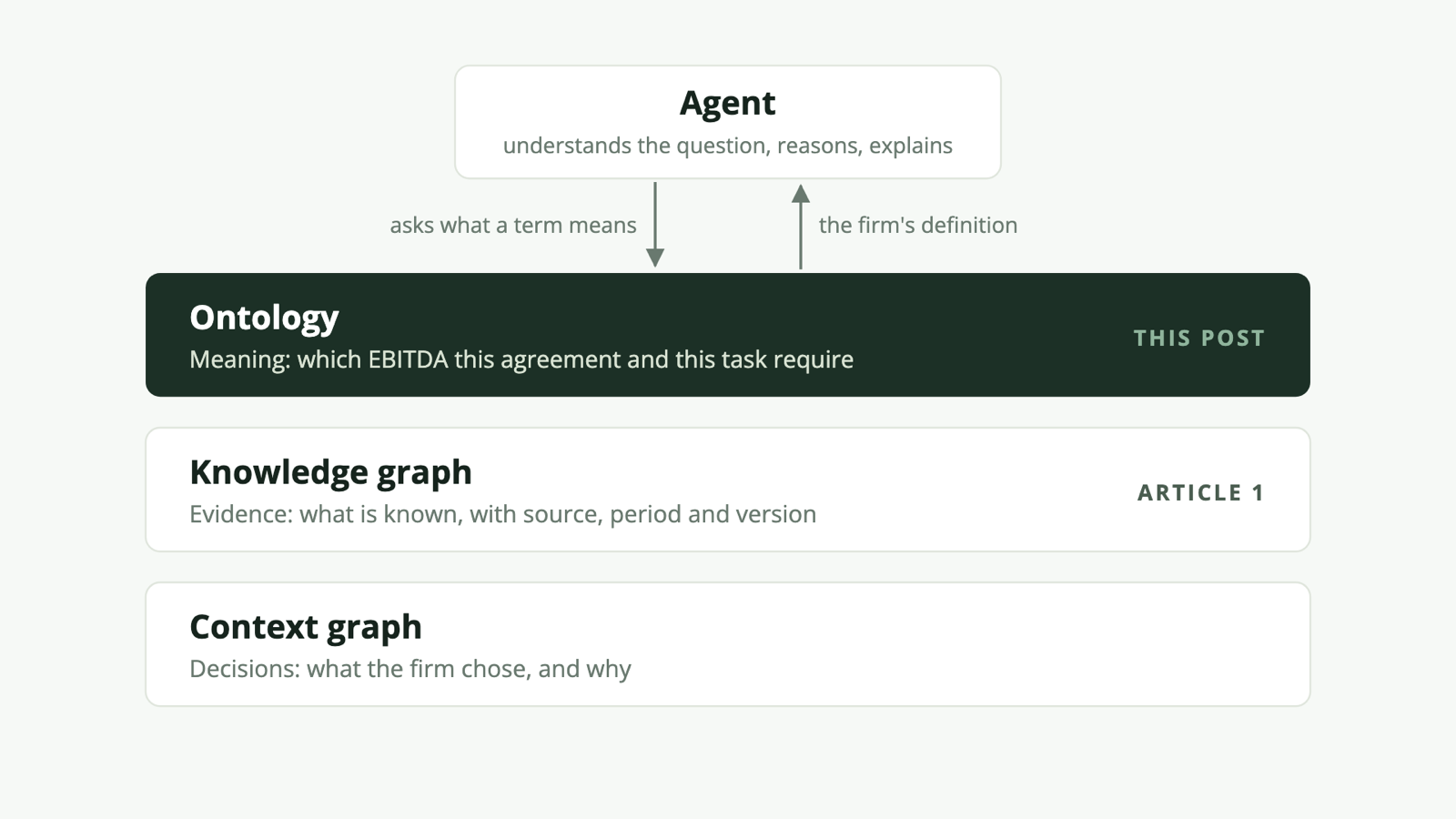
We are approaching a point where investment professionals can build useful AI workflows simply by describing them. That is a remarkable shift. The next challenge is making those workflows speak a consistent financial language.
Financial AI won’t become institutional simply because it learns to read the firm’s documents. It will become institutional when it can consistently work in the firm’s language.